
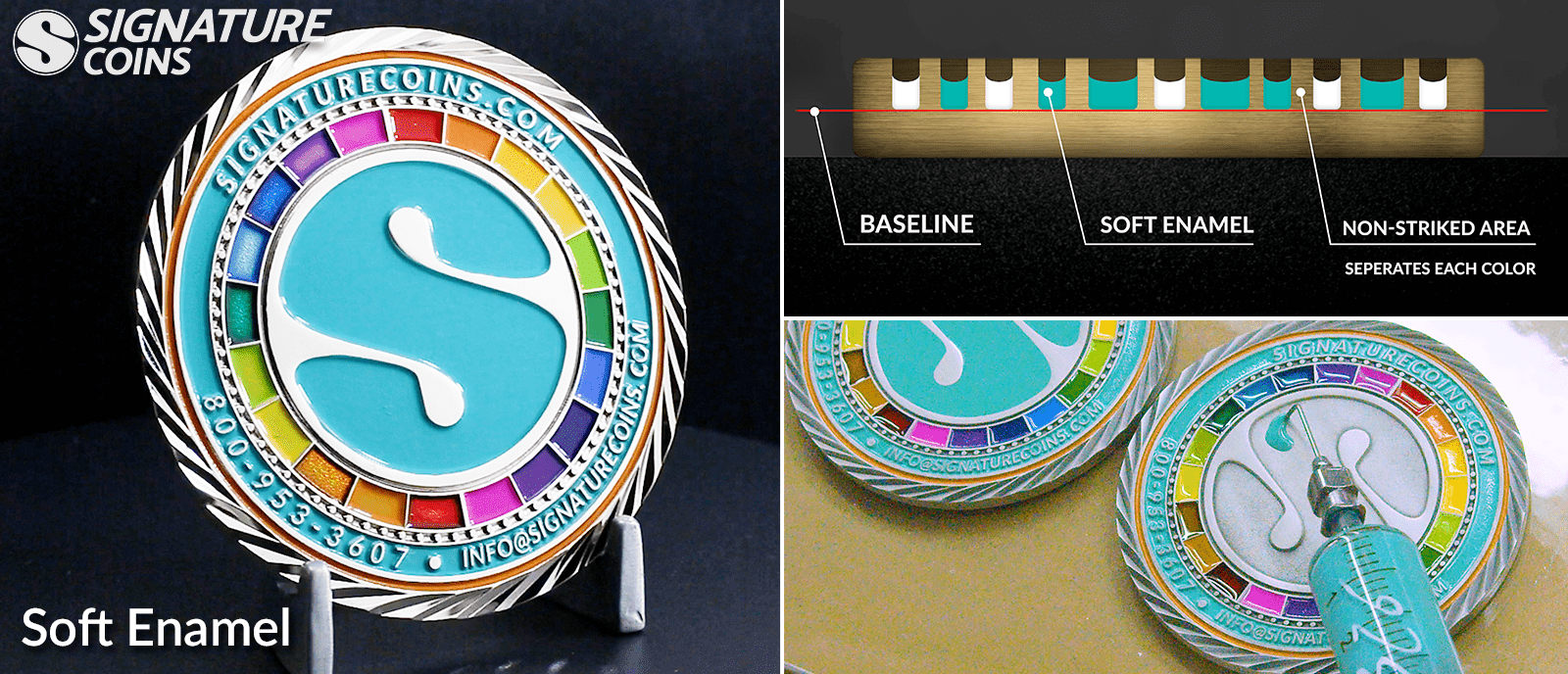
Soft Enamel
After a custom coin is electroplated in your choice of metal plating, enamel paint is added to the recessed areas of your custom coin. The raised metal lines within the design are used to keep the colors from bleeding into one another. Once all the colors are added to these recessed areas, the coins are heat treated to get the paint to dry quickly and to strengthen it against chipping or other wear and tear.
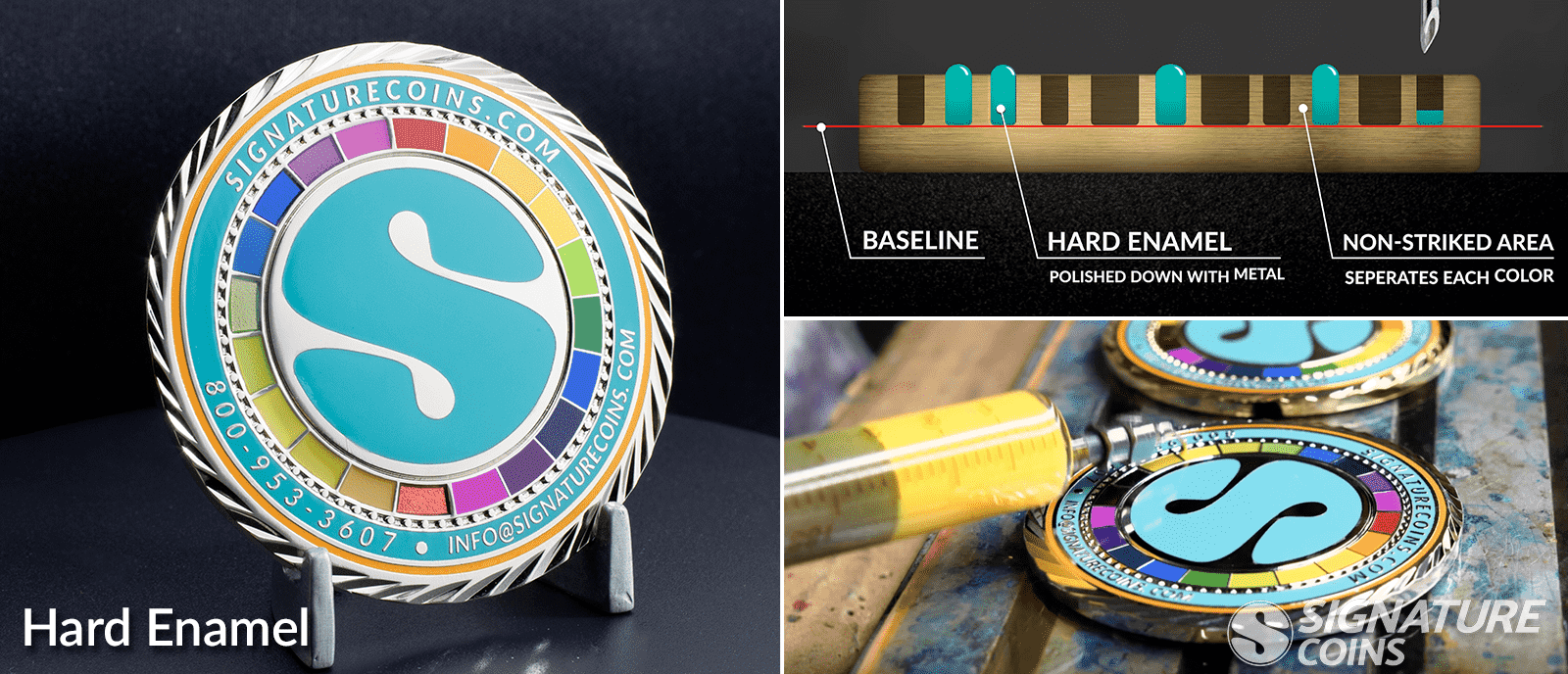
Cloisonné (Hard Enamel)
Just like soft enamel, enamel paint is added to the recessed areas of the custom coin, but unlike with soft enamel, the enamel paint is added until it reaches the top of the metal lines. Each color is heat treated before applying the next color. Metal plating occurs after the color filling, so when the coins enter the polishing process, the final result is a smooth flat surface.
Read Soft vs Hard Enamel Blog Post
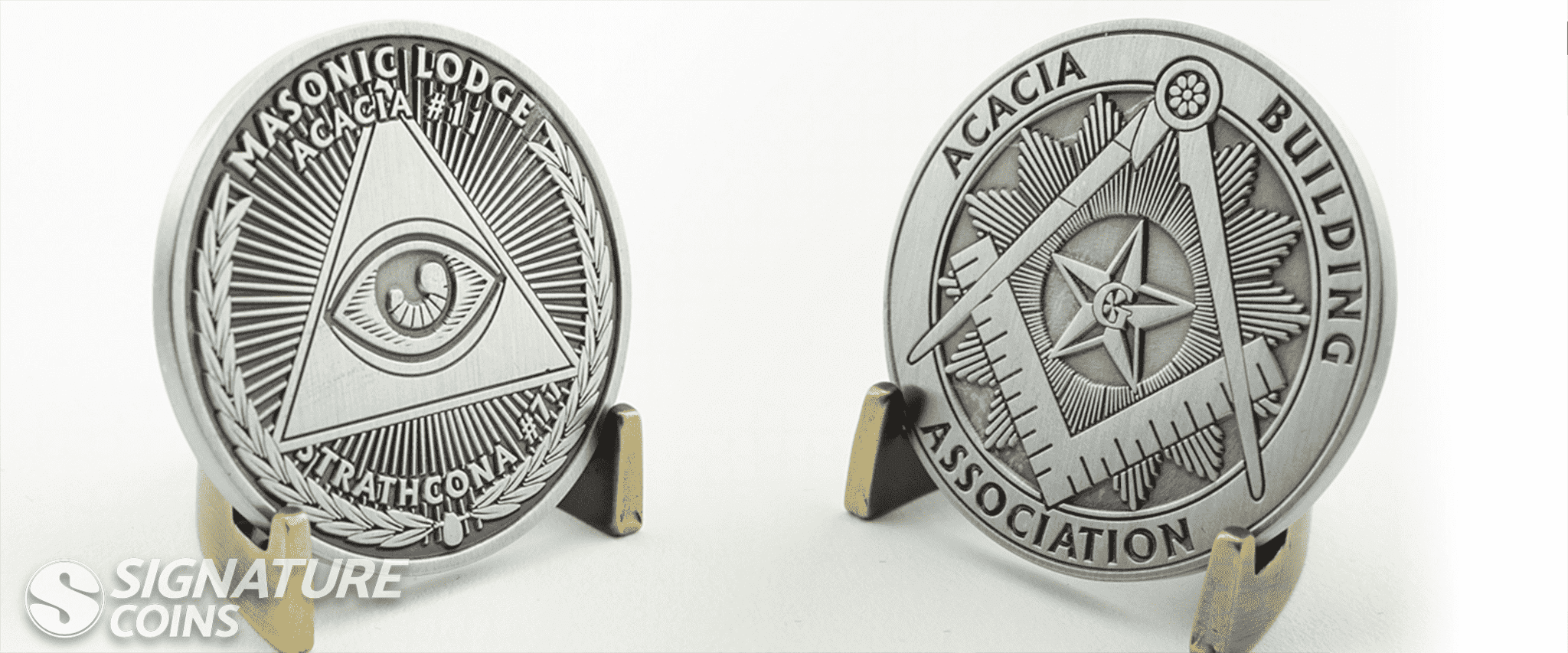
Die Struck
Die striking involves using a freshly made coin mold to stamp artwork into brass. Unlike soft and hard enamel, after the metal plating process, no paint is added to the custom coin.
Related Questions
- What is sandblasting?
- What is the turnaround time for a challenge coin order?
- What kinds of paints are used to add color to my coin?
- How do I know when my coin mold is going to expire?
- How long does it take to make a challenge coin?
- How are challenge coins made?
- Where are your coins made?
- How long do you retain my coin mold once an order is placed?